
The color game sugal is a popular betting game in the Philippines, where players wager on colors that are drawn or spun by a dealer or machine. Furthermore, its fast rounds and simple rules have made it a common pastime in neighborhoods, online platforms, and local gaming halls. Because it involves real money, it is important to understand how the game is structured, what the odds really mean, and which rules protect players. In addition, this guide explains the basics, the legal landscape, and practical steps for playing responsibly.
What Is the Color Game Sugal and How Did It Become Popular?

Color game sugal is a fast, simple betting game built around colors instead of numbers. Players choose a color, place a wager, and wait for a random result. Moreover, its easy rules explain much of its popularity across the Philippines.
Origins of the Color Game in Philippine Culture
Filipinos have long enjoyed informal betting. Card games, cockfighting, and community raffles all share one thread: quick wagers among friends and neighbors. Thus, the color game grew out of this tradition.
Early versions used simple props, such as a spinning wheel, drawn cards, or colored dice. Additionally, organizers kept the rules short so anyone could join within minutes.
Over time, the game moved from neighborhood gatherings to town fiestas and market areas. As a result, its low entry cost made it accessible to ordinary families, which helped it spread quickly.
How the Color Game Differs From Similar Games
Many players confuse the color game with other popular betting games. However, a few key differences make it easier to tell them apart:
- Lotto: Lotto depends on number combinations drawn in official, regulated draws, while the color game uses color outcomes and usually settles faster.
- Bingo: Bingo requires players to match numbers on a card over a longer session. Color bets typically resolve in a single round.
- Dice games: Dice games often involve multiple symbols or totals. The color game focuses on one simple choice.
For example, a player who bets on red wins only if red appears. A bingo player, by contrast, may wait through many calls before completing a card.
Where the Color Game Is Played Today
The game appears in three main settings. Each one, however, offers a different experience:
- Local venues: Sari-sari stores, computer shops, and neighborhood gathering spots.
- Online platforms: Mobile apps and websites that accept e-wallet deposits.
- Community events: Fiestas, barangay celebrations, and holiday gatherings.
In addition, online access has changed how people play. Players can now join from home at any hour. However, this convenience also makes it easier to spend money without noticing.
Tip: Set a spending limit before you start. Treat your bets as entertainment, not income. Therefore, never wager money you need for bills or essentials.
Color Game Basic Rules and Gameplay Flow

Knowing the basic rules helps you avoid mistakes before you place your first bet. The color game sugal is simple, but each platform may apply its own version of the rules. Finally, always read the instructions shown on your screen.
Available Colors and How Bets Are Placed
Most versions use a small set of colors. Common options include:
- Red
- Green
- Violet
Some versions link colors to numbers, usually from 0 to 9. Thus, the winning result determines which color pays out.
To place a bet, follow these steps:
- Select a color on the game screen.
- Enter your bet amount.
- Confirm the bet before the timer runs out.
For example, you might place ₱100 on green. If green wins and the payout is 2x, you receive ₱200. Payout rates vary by operator; therefore, check the payout table before betting.
How a Round Runs From Betting to Result
Each round follows a predictable sequence. First, the betting window opens with a countdown timer. Additionally, players can add or change their bets during this time.
Next, the window closes. The system stops accepting wagers, and the result is generated. Finally, winning bets are paid automatically to your balance.
A typical round moves through these stages:
- Betting opens: The timer starts counting down.
- Betting closes: No new wagers are accepted.
- Result is revealed: The winning color or number appears.
- Payouts are credited: Winnings are added to your account.
Tip: Watch the timer carefully. Moreover, bets submitted near the deadline may fail if the window closes first.
Key Terms: Payouts, House Edge, and Bet Limits
Understanding a few key terms helps you judge any game more accurately.
- Payout: The amount returned for a winning bet, usually shown as a multiplier such as 2x.
- House edge: The built-in advantage the operator keeps over time. A higher house edge means lower expected returns for players.
- Bet limits: The minimum and maximum amounts you can wager in one round.
For example, if a game sets a minimum bet of ₱10 and a maximum of ₱5,000, you cannot wager outside that range. Additionally, bet limits help platforms manage risk.
Best practices:
- Review the game’s information or help section before playing.
- Compare payout rates across platforms.
- Bet only amounts you can afford to lose.
Understanding Color Game Odds, Payouts, and House Edge
Calculating Color Game Outcome Probabilities
Every color outcome has a measurable chance of appearing. You can find it with a simple formula:
Probability = Favorable outcomes ÷ Total possible outcomes
For example, if a game uses three equal colors, each color has a 1 in 3 chance, or about 33.3%. In contrast, if a color appears on only 2 of 10 slots, its chance drops to 20%.
Tip: Confirm how many outcomes the game uses before you bet. Operators do not always publish this clearly; therefore, ask for the full color distribution.
Why Advertised Payouts Differ From Real Returns
Advertised payouts tell you what you win per peso. They do not, however, tell you what you can expect to keep over time. Fair odds and paid odds are rarely the same.
Here is how the gap works:
- Fair payout for a 1-in-3 outcome: 3x your stake (you win 2x profit).
- Advertised payout in many games: 2.5x your stake.
- The difference is the house edge, which the operator keeps over time.
Therefore, a higher multiplier does not always mean better value. Furthermore, you must compare the multiplier against the true probability.
Expected Value Examples
Expected value (EV) shows your average result per bet over many rounds. Use this formula:
EV = (Chance of winning × Net win) − (Chance of losing × Stake)
Example 1: Paid at 2.5x
- Bet: ₱100 on a color with a 1/3 chance
- Net win if you win: ₱150
- EV = (1/3 × ₱150) − (2/3 × ₱100) = ₱50 − ₱66.67 = −₱16.67 per bet
- House edge: about 16.7%
Example 2: Paid at 3x
- Net win if you win: ₱200
- EV = (1/3 × ₱200) − (2/3 × ₱100) = ₱66.67 − ₱66.67 = ₱0
- Therefore, this is a fair game with no built-in edge.
Example 3: Ten rounds at 2.5x
- Expected loss: 10 × ₱16.67 = about ₱166.70
- Short-term results vary widely, but the average trends toward this loss.
Best practices:
- Calculate EV before you place any bet.
- Compare payout multipliers against true probabilities.
- Treat the house edge as the cost of playing, and budget accordingly.
Is the Color Game Sugal Legal in the Philippines?
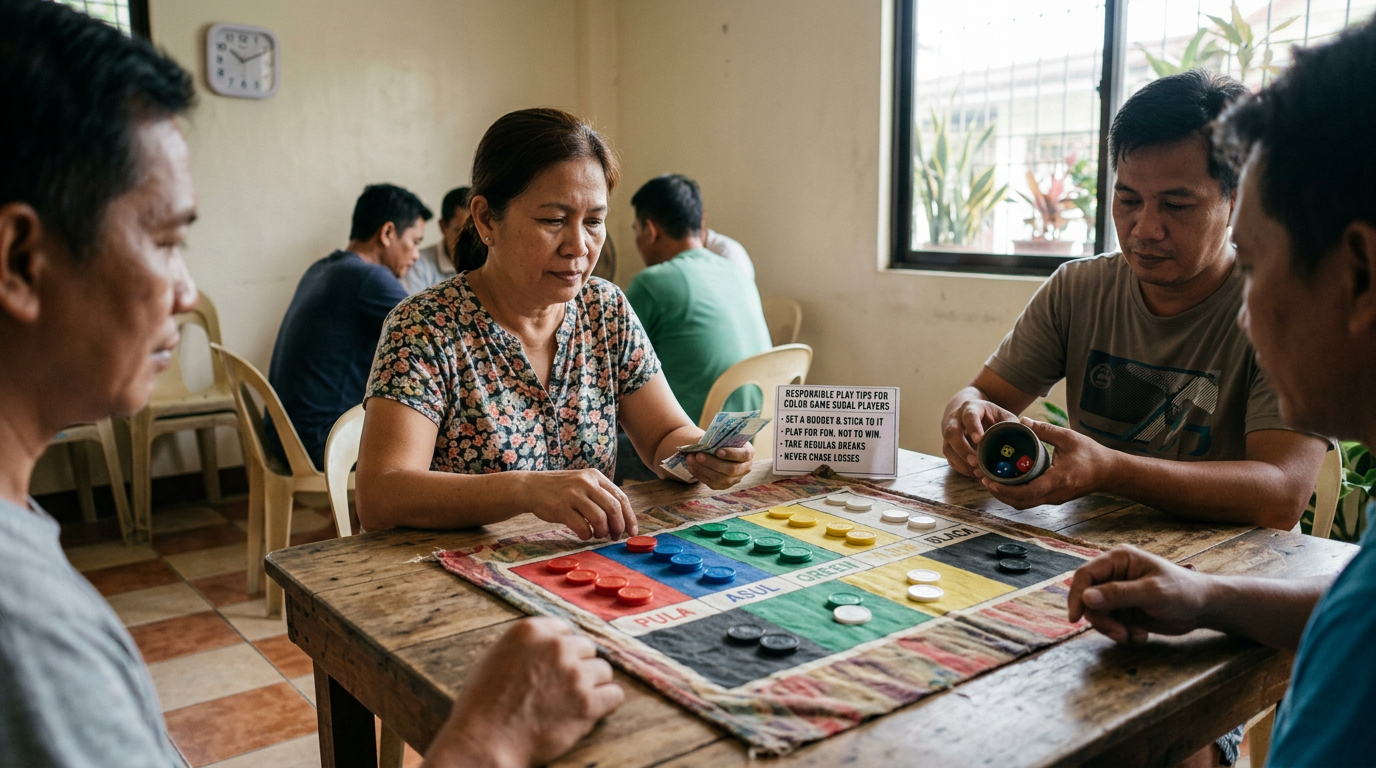
Whether this game is legal in the Philippines depends on who runs it. The game itself is not automatically illegal, but operators must hold proper authority to offer it.
PAGCOR and Other Regulators
The Philippine Amusement and Gaming Corporation (PAGCOR) is the main gambling regulator. It licenses casinos, bingo operations, and online gaming platforms that accept bets from Filipino players.
Other bodies also share responsibility:
- CEZA (Cagayan Economic Zone Authority): Licenses gaming operations within its special economic zone.
- Local government units: Can pass ordinances that restrict or ban gambling in their areas.
- Law enforcement and courts: Act against illegal gambling and unlicensed operators.
A license from one regulator does not cover every activity. Therefore, a player should confirm that the specific operator holds valid authority.
Legal Versus Unlicensed Operators
Licensed operators must meet strict standards. They submit to audits, use fair-play certifications, and maintain proper systems for handling player funds. In contrast, unlicensed operators skip these safeguards, which leaves players exposed.
Common warning signs include:
- No license number, or a license number that cannot be verified
- Promises of guaranteed wins or unrealistically high returns
- Requests to deposit into personal e-wallets or private bank accounts
- Long withdrawal delays or sudden account freezes
Checking Licensing Status
Follow these steps before you deposit any money:
- Find the license number in the website or app footer.
- Verify it on PAGCOR’s official website using its published list of licensees.
- Confirm the company’s registration with the Securities and Exchange Commission.
- Search for complaints in reputable news sources and consumer forums.
For example, if an app claims a PAGCOR license but does not appear in the official list, treat it as unlicensed.
Age Limits and Local Ordinances
Gambling in the Philippines is restricted to adults. PAGCOR rules generally set the minimum age at 21 for casino entry and most gaming activities. Therefore, always check the platform’s age requirement before you register.
Local ordinances matter too. Some cities and municipalities ban certain games or limit operating hours. Although a game may be permitted nationally, it may still be restricted where you live. As a result, check your local government’s rules before playing or promoting these games.
Spotting Scams and Unlicensed Color Game Operators
Scams often hide behind popular titles like the color game sugal. Knowing the warning signs protects your money and personal information. Therefore, run these checks before you deposit any funds.
Red Flags of Unlicensed Operators
Fraudulent platforms tend to show the same warning signs. Watch for these patterns:
- Guaranteed wins: No game can promise profits. Any site claiming “sure win” results or secret formulas is misleading you.
- Unverifiable results: Legitimate platforms explain how results are generated. Fake operators display outcomes that no one can audit.
- Pressure to deposit: Messages like “only three slots left” or “deposit now to claim your bonus” push players into rash decisions.
- Missing license details: Licensed operators display their regulator’s information clearly. Missing or invalid license numbers are a major red flag.
For example, a site that shows a gaming seal but cannot produce a license number deserves suspicion. Therefore, always verify credentials directly with the regulator instead of trusting the website.
Protecting Your Data on Betting Platforms
Scammers value personal and payment information. Guard it carefully on any gaming platform.
- Never share one-time passcodes, PINs, or passwords, even with “support agents.”
- Avoid sending money to personal e-wallet accounts belonging to individuals.
- Use unique passwords and enable two-factor authentication where available.
- Do not upload IDs to unverified websites or social media chats.
In addition, confirm that the site uses a secure connection. Look for “https” in the address bar and a clear privacy policy. As a result, you lower the risk of identity theft and unauthorized charges.
Reporting Scam Operators to Authorities
If you suspect fraud, act quickly. Follow these steps:
- Stop depositing funds immediately.
- Save evidence, including screenshots, chat logs, receipts, and account numbers.
- Contact your bank or e-wallet provider to report unauthorized transactions.
- Report to PAGCOR if the operator claims a license or uses its name without approval.
- File a complaint with the PNP Anti-Cybercrime Group or the NBI Cybercrime Division for online fraud.
- Share your experience in community forums, but stick to facts and avoid unverified accusations.
Consequently, authorities can spot patterns and act faster. Keep copies of every report and reference number you receive.
Responsible Play Tips for Color Game Sugal Players
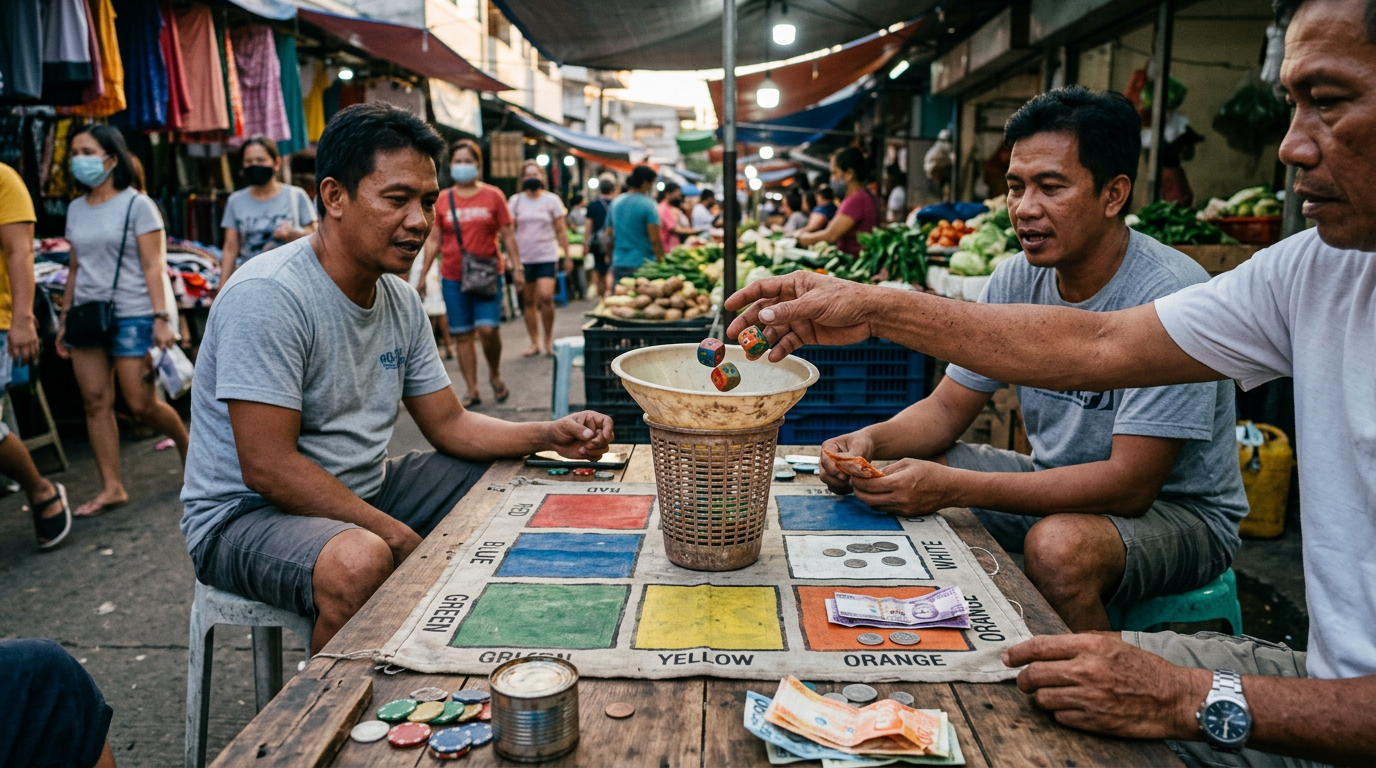
Playing responsibly keeps the experience fun and protects your finances and well-being. In addition, the tips below can help you stay in control.
Set a Fixed Color Game Budget and Stick to It
Decide how much you can afford to lose before you place your first bet. Instead, treat that amount as entertainment spending, not money for bills or savings.
Practical steps:
- Calculate a monthly limit. For example, if you spend ₱500 on entertainment each month, that is your maximum.
- Split it into smaller sessions. Use ₱100 per session instead of spending the full amount at once.
- Use separate funds. Keep gaming money in a different e-wallet or account from your daily expenses.
- Stop when the budget runs out. Do not reload your account to chase losses.
Chasing losses is one of the most common mistakes players make. Moreover, it often leads to bigger losses in a short time.
Recognize Warning Signs of Problem Gambling
Problem gambling can affect anyone. Watch for these signs in yourself or in people you care about:
- Spending more time or money than you planned
- Feeling restless or irritable when trying to cut back
- Borrowing money or selling belongings to keep playing
- Hiding your gaming activity from family or friends
- Using the game to escape stress, anxiety, or sadness
Consequently, many players ignore early warnings until the damage grows. Therefore, check your habits regularly. Ask yourself whether gaming still feels enjoyable.
Getting Help When You Need It
If you notice these signs, do not wait. Several options are available in the Philippines:
- Counseling services: Mental health professionals and licensed counselors can help you address the underlying causes of compulsive gambling.
- Crisis hotlines: The National Center for Mental Health operates crisis lines that offer support for emotional distress.
- Self-exclusion: Some licensed operators allow you to block your own account for a set period. Check with the operator or the regulator for available options.
- Support groups: Peer groups give you a safe space to share experiences and build healthy routines.
For example, a player who feels unable to stop might first block their accounts, then speak with a counselor about the urge to keep betting.
Remember: Asking for help is a sign of strength, not failure.
Common Myths and Misconceptions About the Color Game Sugal
Many players believe myths about how this game works. These ideas sound logical, but they do not match how random outcomes behave. Thus, knowing the facts helps you play with realistic expectations.
The “Due” Color Myth
Many players think a color that has lost many rounds is “due” to win. This belief is known as the gambler’s fallacy. Furthermore, each round produces a fresh, independent result.
For example, suppose blue has not appeared in ten rounds. A player may assume blue must come up soon. However, blue still has the same chance as every other color in the next round.
Therefore, past results do not influence future ones. Consider these habits:
- Treat every round as a separate event.
- Avoid doubling your bet to “recover” previous losses.
- Remember that long losing streaks happen by chance.
Lucky Charms and Color Game Betting Patterns
Some players trust lucky numbers, favorite colors, or patterns they spot on a results board. Random outcomes cannot be predicted this way. Short sequences often look like patterns, but they are usually coincidences.
For instance, a player might see red win three times in a row and switch to red, expecting a fourth win. Nevertheless, the next result still follows the same random chance. Similarly, rituals, lucky items, or special timing do not change the outcome.
Bet Size Does Not Reduce the House Edge
Another common myth claims that betting larger amounts gives you better odds. In reality, the house edge comes from the payout structure. It does not shrink because you wager more.
Consider a simple example. If the house edge is a fixed percentage, a small bet and a large bet both lose that percentage on average. A bigger stake only creates bigger swings in your results. Thus, larger wagers increase both possible wins and possible losses.
Practical Habits to Replace Myths
Replacing myths with clear rules protects your bankroll. Try these best practices:
- Set a budget before you start playing.
- Choose a fixed bet size and keep it consistent.
- Decide a loss limit and stop once you reach it.
- Take regular breaks to avoid emotional decisions.
- Never chase losses with bigger bets.
Therefore, understanding these facts makes the game easier to enjoy responsibly. If you want to explore the game with a clear, informed mindset, Learn more here.
Thank you for reading our guide about color game sugal.
Frequently Asked Questions
What is the color game sugal and how is it played?
The color game sugal is a fast betting game in which players wager on a color, such as red, green, or violet, and wait for a random result. Each round usually follows the same sequence. First, a betting window opens with a countdown timer. Next, you select a color, enter your bet amount, and confirm it before the timer ends. Then the system closes betting and reveals the result. If your color wins, the payout is credited to your balance automatically. Because rounds resolve quickly, the game is simple to learn, even for first-time players. However, rules can differ between operators, so always read the on-screen instructions before placing a bet.
How do payouts and odds work in the color game sugal?
Payouts depend on the operator, so you should check the payout table before betting. For example, a ₱100 bet on green with a 2x payout returns ₱200 if green wins. Some versions link colors to numbers from 0 to 9, which means the winning result determines which color pays out. Keep in mind that every game includes a house edge, which means the operator keeps a long-term advantage. No strategy or pattern can guarantee wins, because each round is designed to be random. Understanding the odds helps you treat the game as entertainment rather than a reliable source of income.
Is the color game sugal legal in the Philippines?
Legality depends on who operates the game and whether they hold the proper authorization. In the Philippines, gaming operators are generally expected to be licensed by the national gaming regulator, PAGCOR, or to operate within a framework approved by the relevant authorities. Informal games at neighborhood gatherings or unlicensed online sites may fall outside these protections. Before you deposit money, look for clear licensing details, transparent terms, and a working customer support channel. If you cannot verify who runs a platform, it is safer to avoid it. Checking the rules yourself protects both your money and your personal information.
How can I play the color game sugal responsibly?
Responsible play starts with setting a spending limit before you begin and sticking to it. Only wager money that you can afford to lose, and never use funds meant for bills, food, or essentials. Take regular breaks, especially during long online sessions, because fast rounds can make it easy to lose track of time and spending. Avoid chasing losses by increasing your bets to recover what you have lost. If you notice that gaming is affecting your sleep, finances, or relationships, stop playing and seek support from a trusted person or a professional help service.
Leave a Reply